


Table of Contents
Introduction
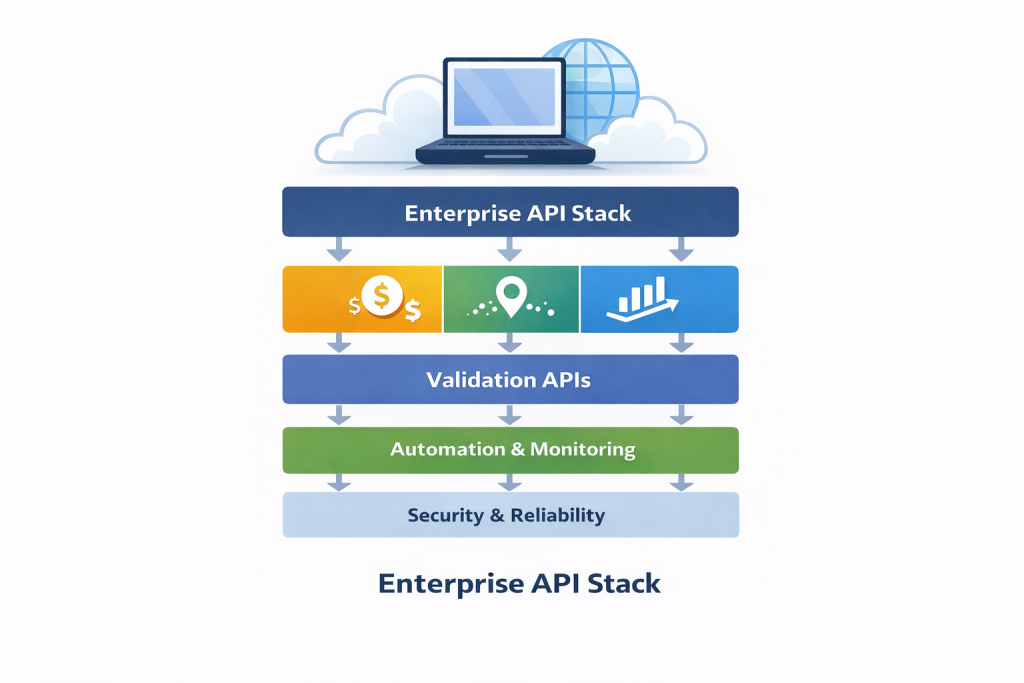
APIs are no longer just a technical implementation detail. For modern product teams, they are a core part of how products scale, stay compliant, and move quickly without rebuilding the same infrastructure repeatedly.
By 2026, most enterprise products will operate across multiple regions, currencies, regulatory environments, and data sources. That complexity makes API choices strategic. The wrong decision creates technical debt and operational risk. The right one quietly accelerates everything.
This guide is designed as a practical reference for product managers, developers, and engineering leads. It focuses on proven, enterprise-ready API categories that consistently appear in scalable, production-grade product stacks and explains when and why each one should be prioritised.
Key Takeaways
Enterprise-ready APIs help teams scale faster while meeting security, reliability, and compliance expectations
The most valuable APIs solve operational problems such as data quality, localisation, automation, and monitoring
Choosing proven API categories early reduces technical debt and vendor sprawl
APILayer offers production-ready APIs across these categories with consistent authentication and documentation
Each API listed here includes a free tier so teams can validate value before committing.

1. IP Geolocation APIs
The business problem it solves
Enterprise products serve users across different countries, regions, and legal frameworks. Relying on self-reported location or hard-coded rules creates inconsistencies, compliance gaps, and security blind spots, especially as traffic volumes and regional exposure increase.
Why it matters at enterprise scale
At scale, location data influences content availability, pricing, tax handling, consent management, fraud prevention, and infrastructure routing. This is why many enterprise teams treat IP intelligence as foundational infrastructure rather than a nice-to-have capability. APILayer has explored how this enables real-world personalisation in its guide on geolocation-based personalisation.
Example use cases
Automatically displaying local language and content
Applying region-specific compliance flows such as GDPR
Blocking or flagging high-risk traffic regions
Routing users to the closest infrastructure or CDN
APILayer APIs to use
ipstack API provides real-time IP geolocation data including country, city, ISP, and threat indicators.
positionstack API complements IP data with forward and reverse geocoding for location-based features.
CTA: Get started with ipstack and test IP geolocation with free API requests.
2. Currency and Exchange Rate APIs
The business problem it solves
Global products need consistent currency conversion. Manual updates or unreliable sources lead to pricing errors, reconciliation issues, and loss of customer trust, particularly in ecommerce, fintech, and subscription-based products.
Why it matters at enterprise scale
Enterprises manage pricing, reporting, and billing across dozens of currencies. Accuracy, historical coverage, and uptime are non-negotiable because even small discrepancies can cascade into revenue leakage or finance reconciliation problems.
Example use cases
Local pricing across 50+ currencies
Multi-currency financial reporting
Cross-border ecommerce checkout
Subscription billing adjustments
APILayer APIs to use
Fixer API delivers real-time and historical exchange rates with enterprise-grade reliability.
Currencylayer API offers lightweight conversion for simpler or cost-sensitive use cases.
CTA: Try Fixer for free and integrate real-time exchange rates in minutes.
3. Email Validation APIs
The business problem it solves
Invalid email addresses damage deliverability, inflate CRM databases, and waste sales and marketing effort. Fixing the problem after data enters downstream systems is expensive and often too late.
Why it matters at enterprise scale
At volume, even a small percentage of bad email data creates reputational and compliance risk. This is why many enterprise teams validate email addresses at the point of capture, before they ever touch marketing platforms or CRMs. APILayer explains this impact in detail in its article on how email validation improves deliverability at scale.
Example use cases
Validating signup forms in real time
Cleaning customer data before it reaches the CRM
Reducing email campaign bounce rates
Preventing fake or automated account creation
APILayer APIs to use
Mailboxlayer API validates email syntax, domain existence, and mailbox availability with low latency.
CTA: Validate email addresses in real time with Mailboxlayer. Free tier available.
4. Phone Number Validation APIs
The business problem it solves
Invalid phone numbers break verification flows, reduce SMS deliverability, and weaken customer identity signals used across onboarding, support, and fraud prevention.
Why it matters at enterprise scale
Global enterprises need consistent validation across numbering plans, carriers, and regions without slowing down user onboarding or introducing unnecessary friction.
Example use cases
User onboarding and account verification
SMS and voice notifications
Fraud prevention
CRM data enrichment
APILayer APIs to use
Numverify API validates international phone numbers and identifies carrier and line type.
CTA: Test global phone number validation with Numverify. Start free.
5. Market and Financial Data APIs
The business problem it solves
Many modern products embed financial data for analytics, reporting, or customer insight. Building and maintaining direct data pipelines from exchanges is costly, complex, and slow.
Why it matters at enterprise scale
Enterprises need licensed, reliable data with historical coverage and predictable update intervals to support analytics, dashboards, and customer-facing features.
Example use cases
Displaying real-time stock prices
Investment and analytics dashboards
Market trend analysis
APILayer APIs to use
Marketstack API provides real-time and historical market data across global exchanges.
CTA: Explore Marketstack and access market data with a free plan.
6. Web Scraping APIs
The business problem it solves
Many valuable data sources are not exposed through APIs. Internal scraping solutions are fragile, expensive, and difficult to scale, especially when websites change structure or block traffic.
Why it matters at enterprise scale
Enterprises need scraping infrastructure that handles proxies, CAPTCHAs, JavaScript rendering, and rate limits reliably. APILayer explores this in its guide on building reliable web scraping pipelines.
Example use cases
Competitor price monitoring
Market research
Content and data aggregation
APILayer APIs to use
Scrapestack API manages headless scraping, IP rotation, and rendering through a simple API call.
CTA: Try Scrapestack free and extract web data without managing scraping infrastructure.
7. Website Screenshot APIs
The business problem it solves
Manual screenshots do not scale for monitoring, reporting, or compliance workflows, particularly when teams manage large numbers of pages or customer sites.
Why it matters at enterprise scale
Automated screenshots enable consistent audits, visual regression testing, and client reporting without manual effort.
Example use cases
Visual regression testing
Website change monitoring
Client-facing reports
APILayer APIs to use
Screenshotlayer API captures full-page screenshots across devices and resolutions programmatically.
CTA: Capture automated website screenshots with Screenshotlayer. Start free.
8. Identity and Fraud Detection APIs
The business problem it solves
Fraud and abuse increase as products scale. Manual review and static rules quickly become ineffective, especially across multiple markets and user segments.
Why it matters at enterprise scale
Layered signals allow teams to reduce risk without adding friction to legitimate users.
Example use cases
Suspicious signup detection
Account takeover prevention
Risk-based access control
APILayer APIs to use
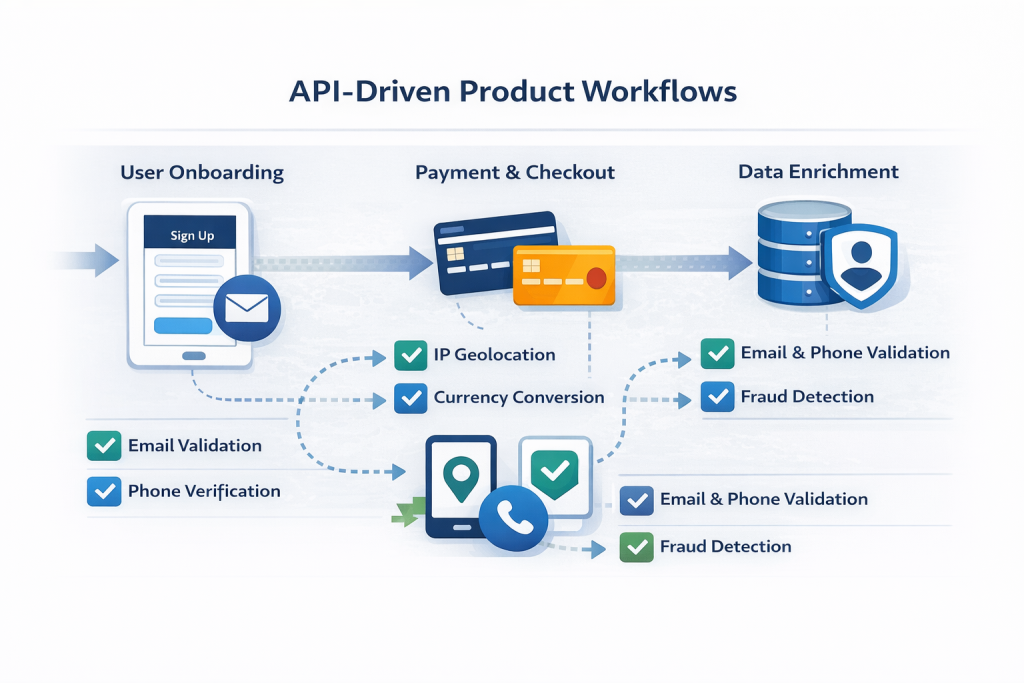
Combining ipstack, Mailboxlayer, and Numverify creates a strong baseline fraud detection stack using existing data signals.
CTA: Build a fraud APILayerdetection stack using APILayer APIs. Free tiers available.
9. Automation and Workflow APIs
The business problem it solves
Manual processes slow teams down and introduce errors between systems, especially as products grow and integrations multiply.
Why it matters at enterprise scale
Automation enables event-driven workflows, faster response times, and cleaner integrations between services.
Example use cases
Event-triggered workflows
Data enrichment pipelines
Operational alerts
10. Monitoring and Reliability APIs
The business problem it solves
Downtime and silent failures damage customer trust and internal confidence, particularly when APIs underpin critical workflows.
Why it matters at enterprise scale
Enterprises require predictable SLAs, visibility, and clear escalation paths. This is where platform-level support becomes a differentiator, as outlined in APILayer’s introduction to Platinum Support for enterprise API teams.
APILayer advantage
APILayer provides consistent uptime, centralised authentication, and optional enterprise-grade support for teams operating at scale.
CTA: Learn more about APILayer Platinum Support for enterprise teams.
The Best Enterprise API Stack Without Cookies
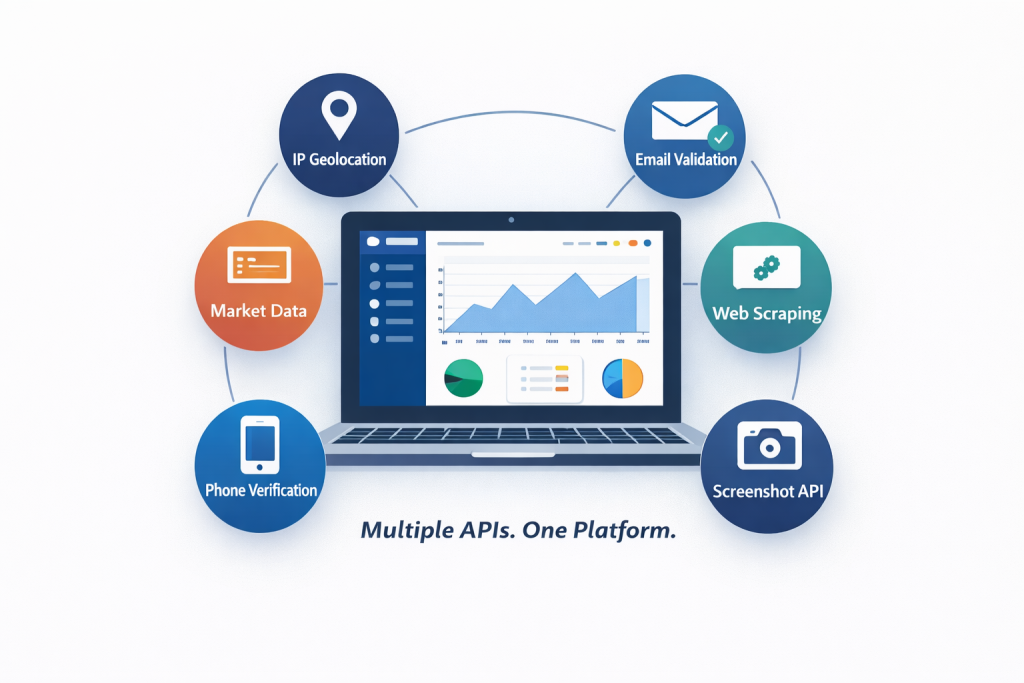
As privacy regulations tighten, product teams increasingly rely on server-side APIs rather than client-side tracking. Combining IP intelligence, validation APIs, and market data enables personalisation and analytics without cookies. This approach aligns closely with the principles discussed in APILayer’s API aggregation strategy guide.
Conclusion
Enterprise-ready APIs are strategic infrastructure. Teams that scale successfully in 2026 will not be those that build everything from scratch, but those that assemble reliable, secure, and composable API stacks.
APILayer offers a practical foundation for that approach, with a broad portfolio of APIs, a consistent developer experience, and enterprise support options.
CTA: Explore all APILayer APIs and build an enterprise-ready API stack with one platform.
FAQs
What makes an API enterprise-ready
An enterprise-ready API offers high uptime, clear documentation, predictable pricing, strong security practices, and support options that scale with production workloads.
Should startups use enterprise APIs
Yes. Using enterprise-grade APIs early helps teams avoid technical debt, reduces rework as the product grows, and makes it easier to scale without changing core integrations.
Which API category should I prioritise first
Data quality APIs such as email validation, phone number validation, and IP geolocation typically deliver the fastest ROI because they improve reliability across multiple downstream systems.
Can APILayer APIs be combined in one product
Yes. APILayer APIs are designed to work together and share consistent authentication patterns, making it easier to integrate multiple services within a single product stack.
Is there a free tier available
Most APILayer APIs include a free tier, allowing teams to test functionality and performance before committing to a paid plan.