


Cookies are disappearing and privacy rules are tightening, yet customers still expect a personal touch. When a website greets you in the wrong language or shows prices in another currency, the experience breaks, which is why teams rely on geolocation data for privacy.
So how can brands stay relevant without following users around the web?
Geolocation data offers a simple, privacy-friendly answer. It helps companies tailor content, pricing, and experiences while staying fully compliant with GDPR and CCPA.
Table of Contents
Key Takeaways
- Third-party cookies are disappearing, but personalisation is here to stay
- Geolocation gives context without tracking anyone
- APIs such as IPstack make privacy-first experiences easy to scale
Brands that respect privacy build stronger, longer-term trust
What Is Geolocation Data?
Geolocation data identifies where a user connects from through their device or IP address. It can reveal a visitor’s country, region, or city in seconds and adjust what they see accordingly.
It doesn’t store personal details or track behaviour over time. Think of it as a quick snapshot of context rather than a long-term profile exactly what privacy-first marketing needs.
If you’d like a deeper look at today’s privacy standards, explore Google’s Privacy Sandbox or this McKinsey insight on why personalisation still drives growth.
Why Third-Party Cookies Are Ending
For years, third-party cookies were the backbone of digital advertising. They tracked journeys across sites and powered the ads that seemed to follow you everywhere. That approach is now fading fast.
With new privacy regulations and browser updates, Chrome, Safari and Firefox are removing third-party cookies altogether. According to Teads, about 45 per cent of global web traffic is already cookieless, and the share keeps climbing.
So, what’s next? Geolocation gives marketers a compliant alternative. It keeps experiences relevant without storing personal identifiers or raising consent fatigue.
Get Your Free
IP Geolocation Key!
IPstack
Join thousands of developers using ipstack for real-time IP intelligence!
Get Your Free API Key!100 Requests Free!
How Geolocation Data Creates Privacy-First Personalisation
What really makes geolocation powerful is its focus on context. It helps brands understand where a visitor comes from and what might matter most in that moment.
Here’s how companies use it every day:
- Show prices in the correct local currency
- Offer delivery options based on region
- Translate content automatically
- Highlight seasonal promotions or nearby events
- Adjust opening hours or time zones
It’s a small shift that makes a big difference. Visitors instantly feel understood, even though no personal data is stored.
Real Use Cases Across Industries
E-commerce
Ever added something to your basket only to find shipping doesn’t reach your country? Geolocation fixes that by showing accurate delivery options and taxes upfront.
Travel and hospitality
Hotels and airlines surface deals and attractions that match a traveller’s location, turning browsers into bookings.
Media and streaming
Platforms use geolocation to meet regional licensing rules while keeping recommendations relevant.
Finance and banking
Banks monitor sign-ins from unusual places to spot potential fraud instantly.
Retail and food delivery
Chains send real-time offers to nearby customers. It feels spontaneous, yet it’s simply a smart use of location context.
Top 5 APIs for Geolocation-Based Personalisation
IPstack

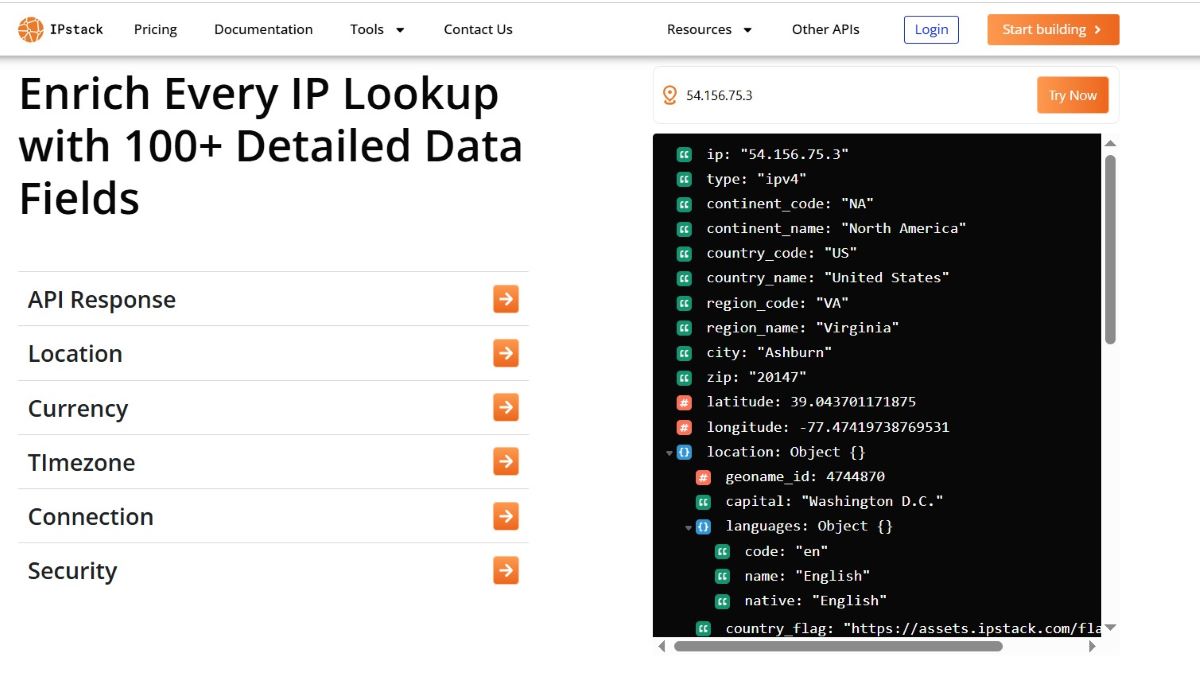
IPstack provides precise IP-based geolocation with worldwide coverage, SSL encryption and clean developer documentation.
Positionstack

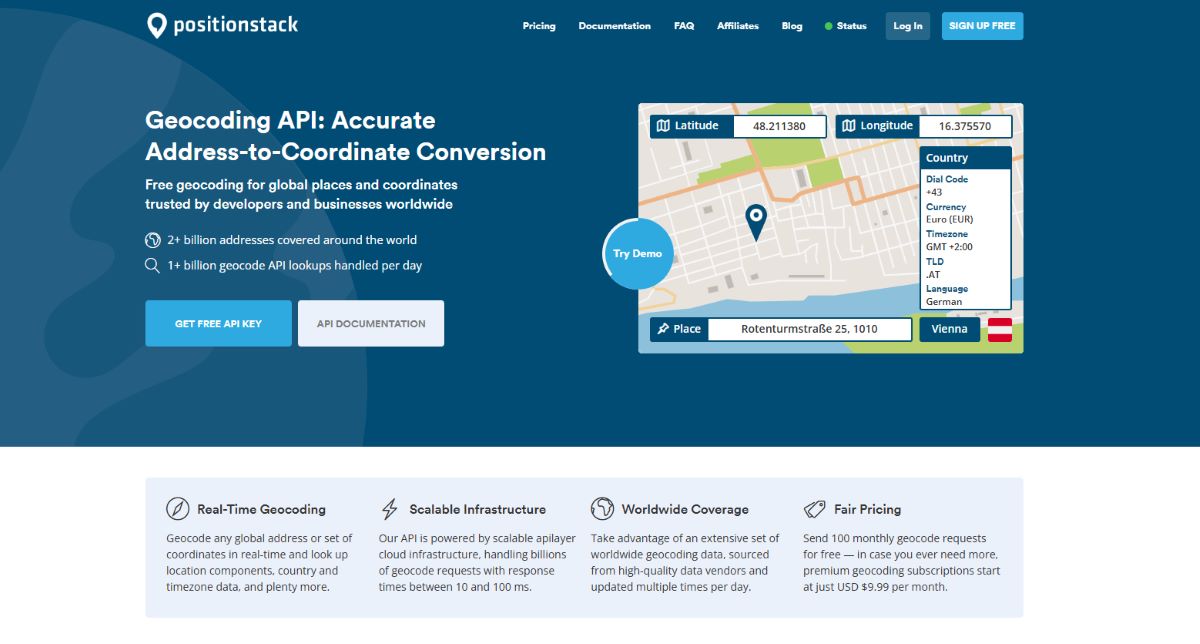
Positionstack handles real-time forward and reverse geocoding, perfect when you need to convert addresses to coordinates.
IPinfo

IPinfo delivers reliable IP data with privacy controls and helpful extras such as network or company information.
MaxMind GeoIP2

MaxMind is trusted by enterprises for IP intelligence and fraud detection.
Google Maps Geolocation

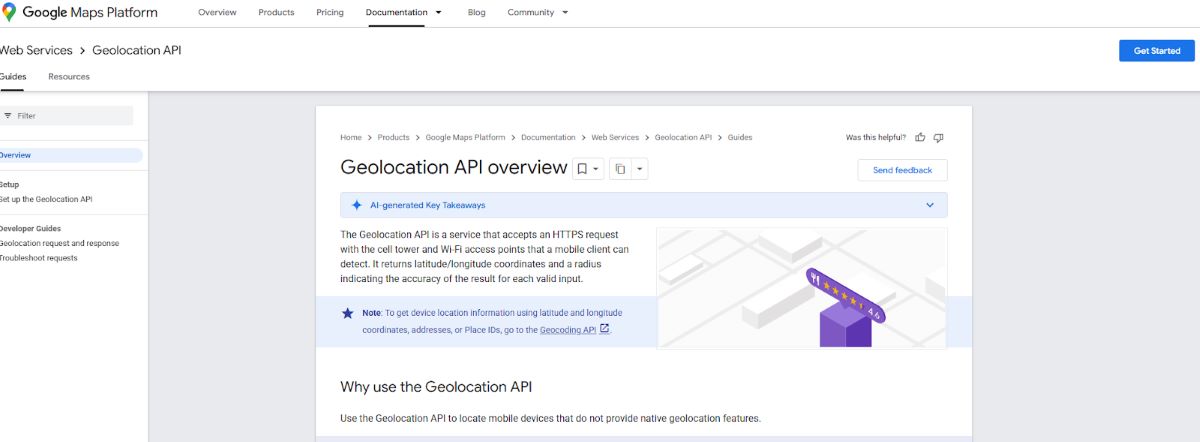
Google Maps Geolocation blends Wi-Fi and cell-tower signals for high accuracy and easy integration within Google Cloud.
Why IPstack Is a Smart Choice
IPstack stands out for teams that need accuracy, compliance and speed. It just works, simple setup, secure connections, and global coverage.
Main benefits:
- Global IPv4 and IPv6 support
- Real-time responses with low latency
- SSL security on every call
- JSON and XML output formats
- Quick integration with common programming languages
Since IPstack relies on anonymised IP data, it supports cookieless tracking and privacy-first marketing from day one. You can explore it freely at ipstack.
Frequently Asked Questions
What is cookieless personalisation?
It’s the practice of tailoring experiences using contextual data such as location or device instead of tracking cookies.
Is geolocation data for privacy-compliant?
Yes, when handled responsibly. It’s anonymised and aggregated. Just mention its use in your privacy notice.
Can geolocation replace cookies completely?
Not entirely, but it complements first-party data and keeps relevance high when cookies disappear.
Who benefits most from geolocation data?
E-commerce, travel, finance and media sectors see the biggest gains from localised experiences.
How can I start using it?
Try an API like IPstack to localise language, currency and promotions. Track engagement uplift, then expand to more advanced use cases
Personalisation doesn’t end with cookies it simply evolves. Geolocation data helps brands stay relevant and trusted while protecting user privacy.
Explore the APIlayer marketplace to discover APIs that bring privacy-first personalisation to life.
Recommended Resources:
5 Best Free Geolocation APIs In 2025
Grok 4.1 vs Gemini 3 vs GPT 5.1: We Tested the Latest LLMs on the IPstack API
Build an AI Agent for Fraud Detection Using Python, Langchain, and IPstack