


Accurate historical exchange rate data is an essential component for modern applications in 2026. Whether you’re building financial dashboards, reconciling international payments, normalizing multi-currency SaaS revenue, or running large-scale analytics, choosing the right historical exchange rate API directly impacts data accuracy, compliance, and long-term scalability.
With a wide range of currency APIs available, selecting the best option isn’t just about price or request limits. Developers and businesses need reliable data sources, consistent historical coverage, predictable API performance, and documentation that makes integration easy. Production systems require consistent guarantees around data accuracy, uptime, and long-term support.
In this listicle, we compare the 7 best historical exchange rate APIs in 2026, evaluating them based on data accuracy, historical depth, pricing, rate limits, and developer experience. You’ll find a clear breakdown of which APIs are the best for startups, SMBs, and enterprise teams, along with direct recommendations to help you confidently choose the right currency API for your use case.
Table of Contents
Key Takeaways
- Fixer API is the best overall historical exchange rate API in 2026, offering a strong balance of data accuracy, historical coverage, clear pricing, and easy integration for developers.
- Currencylayer stands out for enterprise and financial applications that require long historical depth, stable performance, and dependable data sources.
- ExchangeRatesAPI is a solid choice for teams looking for clean, predictable exchange rate data with a straightforward API and reliable documentation.
- Exchangerate.host is suitable for testing, learning, and lightweight use cases, but may not meet the consistency and support expectations of production environments.
- The best historical exchange rate API depends on your use case with factors like historical depth, update frequency, scalability, and support mattering more than raw request limits.
How We Evaluated the Best Historical Exchange Rate APIs
To identify the best historical exchange rate APIs in 2026, we evaluated each provider using criteria that reflect real-world production requirements, not just feature lists. Our goal was to assess how well each API performs when accuracy, reliability, and long-term maintainability matter.
Data Accuracy and Sources
We assessed the quality and consistency of each API’s exchange rate data, including where the data originates and how it is aggregated. APIs backed by reliable financial data sources and transparent methodologies ranked higher, especially for use cases involving reporting, billing, and financial analysis.
Historical Coverage and Depth
Historical depth is critical when working with long-term analytics, audits, or trend analysis. We evaluated how far back each API’s historical data goes, whether older data remains accessible across pricing tiers, and how consistently historical endpoints perform.
Update Frequency and Data Freshness
We reviewed how frequently exchange rates are updated and how well historical data aligns with published timestamps. APIs offering predictable update schedules and clearly documented behaviour scored higher, particularly for applications that rely on precise daily or intraday rates.
API Performance and Reliability
Performance matters in production. We considered response times, uptime expectations, and overall API stability under sustained usage. Providers with a track record of reliable availability and scalable infrastructure were prioritized.
Developer Experience and Documentation
Ease of integration plays a major role in adoption. We evaluated documentation quality, endpoint consistency, authentication methods, and error handling. APIs that are easy to integrate, well-documented, and developer-friendly stood out.
Pricing Transparency and Scalability
Finally, we reviewed pricing structures, usage limits, and how well each API scales as application demand grows. Clear, predictable pricing models and flexible plans for startups, SMBs, and enterprise teams ranked higher than opaque or restrictive offerings.
Best Historical Exchange Rate APIs in 2026
Fixer API – Best Overall Historical Exchange Rate API
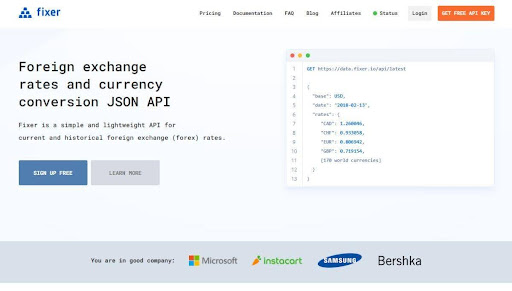
Get Your Free Fixer API Key
Access reliable real-time and historical exchange rate data for 170+ world currencies. Build powerful financial applications with a developer-friendly currency exchange API.
Get Free API Access✓ Free monthly API requests included
Fixer API is the best overall historical exchange rate API in 2026, offering a strong balance of accuracy, historical coverage, and developer experience. It’s well-suited for applications that require reliable daily historical data across a wide range of currencies.
Fixer provides access to historical exchange rates, time-series data, and currency symbols through a clean REST API. Its documentation is clear, integration is straightforward, and response formats are predictable, making it easy to use in both small projects and large production systems.
Best for: SaaS platforms, financial dashboards, analytics tools, and applications that need dependable historical currency data without unnecessary complexity.
Try Fixer API Free → https://fixer.io/
CurrencyAPI.com – Full Real-Time & Historical Exchange Rate API
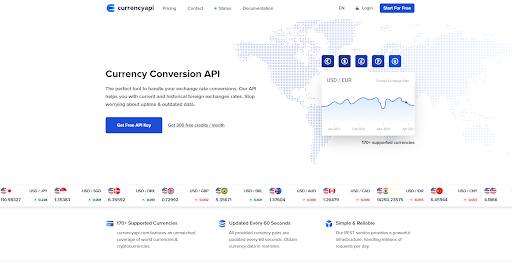
CurrencyAPI.com offers a robust REST API delivering both live exchange rates and historical forex data going back multiple years. It supports over 170 world currencies and includes cryptocurrencies, and its responses are available in JSON format for easy integration into web, mobile, and server-side applications. Developers can query exchange rates by specific dates or ranges, making it useful for analytics, financial reporting, and cross-currency normalization.
Best for: Apps and analytics tools that need a versatile currency API with broad coverage and historical support.
ExchangeRatesAPI – Best for Clean and Predictable Currency Data
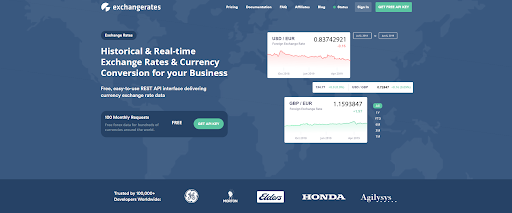
ExchangeRatesAPI is a solid choice for teams that value simplicity and consistency. The API focuses on delivering clean, well-structured exchange rate data with straightforward endpoints for historical and time-series queries.
It’s particularly appealing for developers who want minimal configuration and predictable responses. ExchangeRatesAPI integrates easily into existing systems and works well for applications that don’t require advanced financial features but still need reliable historical exchange rates.
Best for: Internal tools, reporting systems, and applications where clarity and ease of use matter most.
Get started with ExchangeRatesAPI → https://exchangeratesapi.io/
Currencylayer API – Best for Enterprise and Financial Applications
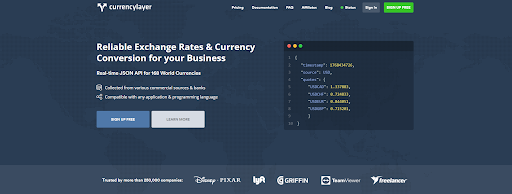
Currencylayer is designed for enterprise-grade use cases where accuracy, historical depth, and scalability are critical. It offers extensive historical exchange rate coverage and is backed by reliable financial data sources, making it a strong choice for regulated or data-intensive environments.
Currencylayer supports large request volumes and is commonly used in financial products, billing systems, and compliance-driven applications. Its feature set and infrastructure make it better suited for teams that need long-term stability and higher usage limits.
Best for: Enterprise platforms, financial services, accounting systems, and high-volume applications.
Try Currencylayer API → https://currencylayer.com/
CurrencyRateAPI – Simple Exchange Rate API with Historical Support
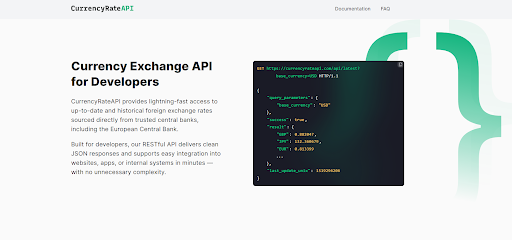
CurrencyRateAPI provides fast access to up-to-date and historical foreign exchange rates sourced from trusted institutions such as central banks (including the ECB). It returns clean JSON results and offers endpoints for currency codes, latest rates, and historical data. It’s designed to be easy to integrate for developers building financial tools, dashboards, or conversion utilities.
Best for: Developers who want a lightweight API focused on clean, reliable historical and live exchange rate data.
Exchangerate.host – Best for Testing and Lightweight Use Cases

Exchangerate.host provides free access to historical exchange rate data and is often used for experimentation, learning, or lightweight applications. It supports common endpoints for historical and time-series data without requiring authentication.
While it can be useful for early development or non-critical projects, it may not offer the same guarantees around data consistency, uptime, or long-term support as managed providers.
Best for: Prototyping, demos, educational projects, and low-risk use cases.
CurrencyApi.net – FX Rates API with Historical Data Since 2000
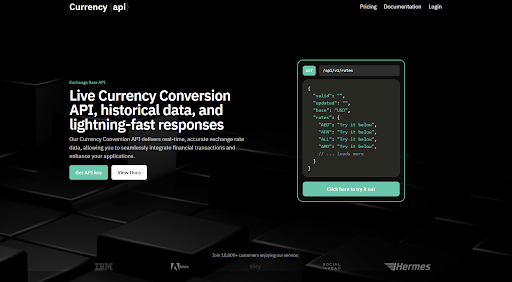
CurrencyApi.net offers an FX rates API that includes historical exchange rates going back to the year 2000. Its endpoints return up-to-date exchange rate information and historical data in JSON, with support for single dates and multi-day ranges — making it suitable for trend analysis, reporting, and modelling. Built with performance in mind, this API aims to deliver low latency and reliable uptime for high-traffic apps.
Best for: Systems requiring deep historical forex coverage and stable performance under volume.
Other Notable Historical Exchange Rate APIs
In addition to the options above, there are several other currency APIs on the market that may fit niche requirements, such as regional data coverage or specialized financial datasets. However, for most developers and businesses in 2026, the APIs listed above provide the best balance of reliability, features, and scalability.
How to Choose the Right Historical Exchange Rate API
Choosing the right historical exchange rate API in 2026 means focusing on how the data will be used in production, not just which endpoints are available. Accuracy, reliability, and scalability should guide the decision.
Key Questions to Ask
Before choosing an API, consider:
- How far back does the historical data go?
- Are rates provided for exact dates or timestamps?
- Is the API stable, well-documented, and easy to integrate?
Budget vs Accuracy
Some use cases can tolerate minor discrepancies, but billing, accounting, and financial reporting require accurate, consistent historical rates. In production systems, reliability often matters more than short-term cost savings.
Compliance and Reporting
Applications handling financial reporting or audits need exchange rates that are traceable to reliable sources and match the correct transaction date. Consistency and transparency are essential.
Scaling Over Time
As usage grows, consider rate limits, pricing predictability, and uptime. An API that scales smoothly helps avoid performance issues and unexpected costs.
FAQs – Historical Exchange Rate APIs (2026)
1. What is a historical exchange rate API?
A historical exchange rate API provides access to past currency exchange rates for specific dates or date ranges. Developers use this data for financial reporting, billing reconciliation, analytics, forecasting, and compliance-related workflows.
2. Are free historical exchange rate APIs reliable for production?
Accuracy depends on the data sources and update methodology used by the provider. Production-ready APIs typically aggregate data from reliable financial sources and deliver consistent historical rates suitable for reporting and billing use cases.
3. How far back do historical exchange rate APIs usually go?
Most established currency APIs offer historical data going back to the late 1990s or early 2000s. The exact historical depth can vary by provider and pricing tier, so it’s important to verify coverage before integrating.
4. What’s the difference between real-time and historical exchange rate APIs?
Real-time exchange rate APIs provide current or near-real-time currency values, while historical APIs return rates for past dates. Historical data is essential for accurate reporting, audits, and revenue normalization, where today’s rate would produce incorrect results.
5. How do rate limits affect applications using historical exchange rate data?
Rate limits determine how many requests an application can make within a given period. For reporting or analytics workloads that query large historical ranges, choosing an API with flexible limits and predictable pricing helps avoid throttling and performance issues.
Final Recommendation
Choosing the right historical exchange rate API in 2026 depends on your use case, required data accuracy, and scale. Based on our evaluation:
- Fixer API is the top overall choice, offering reliable historical data, extensive currency coverage, and straightforward integration. It works well for developers, startups, and SMBs who need a dependable, easy-to-use API.
Try Fixer API Free - Currencylayer is best for enterprise-grade applications where accuracy, compliance, and high-volume usage are critical. Its robust infrastructure and long-term support make it ideal for large organizations and financial systems.
Start with Currencylayer - ExchangeRatesAPI is perfect for teams prioritizing clean, predictable data with minimal integration overhead. It’s suitable for reporting systems, internal tools, or mid-sized businesses that want simplicity without sacrificing reliability.
Explore ExchangeRatesAPI
No matter your size or application, selecting the API that aligns with your accuracy requirements, historical depth, and scalability needs will ensure consistent results and smooth integration. Start today and see how these APIs can power your currency data workflows.
Stay Connected
Recommended Resources:
