

Search engine results pages in 2026 are complex, dynamic, and highly personalised. A single query can surface ads, featured snippets, local packs, shopping results, images, videos, and AI-generated summaries. For SEO teams and market researchers, this makes accurate SERP data both more valuable and harder to collect.
SERP APIs solve this by abstracting away the operational complexity. They handle browser emulation, proxy rotation, geo targeting, and CAPTCHA challenges, returning structured results that can be consumed by dashboards, analytics pipelines, and internal tools.
This guide ranks the 7 best SERP APIs in 2026 based on real-world usability, data quality, scalability, and developer experience. By the end, you should be able to confidently choose a SERP API that fits your SEO or market research use case and start testing it immediately.
This approach aligns with how many teams already use APIs to standardise external data sources across SEO, analytics, and market research workflows. Explore more practical guides on the APILayer blog.
Table of Contents
Key takeaways
- Zenserp and Serpstack offer the best balance of accuracy, ease of use, and predictable pricing for SEO-focused teams
- Enterprise providers like Bright Data and Oxylabs are designed for very high volumes and strict compliance requirements
- Scrapingdog and SerpApi are strong options for developers experimenting or building prototypes
- The right SERP API depends on query volume, geographic coverage, SERP feature depth, and infrastructure ownership
- All tools listed provide free trials or credits, making hands-on evaluation easy
How we ranked the best SERP APIs for SEO and market research
Each SERP API in this list was evaluated against criteria that matter in production environments:
- Search engine coverage and regional support
- SERP feature depth, including ads, snippets, maps, and shopping
- Geo, language, and device targeting
- Response speed and data freshness
- Documentation quality and onboarding experience
- Pricing transparency and free tier availability
- Suitability for developers, SMBs, and enterprise teams
If you’re building internal SEO dashboards or analytics pipelines, this pairs well with our guide on how to build scalable data workflows using APIs
1. Zenserp Best overall SERP API for SEO teams
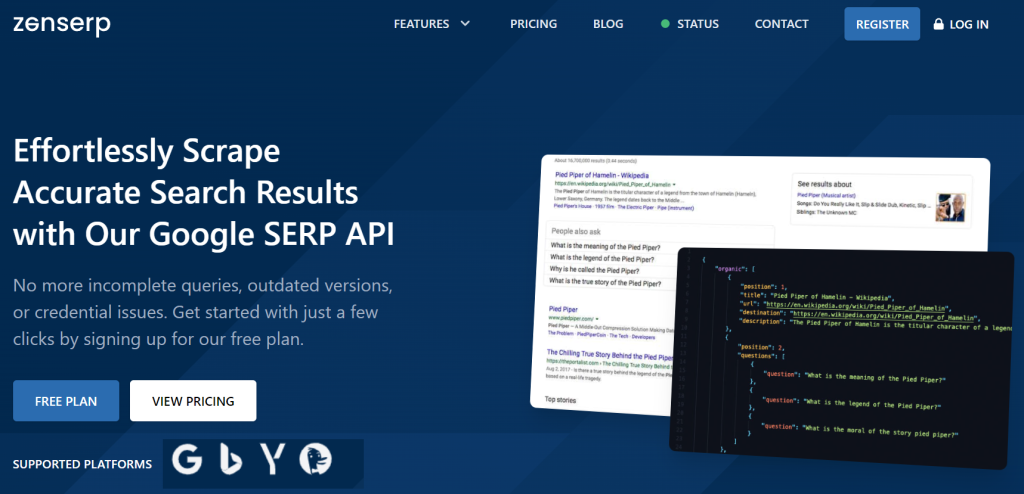
Zenserp is built for teams that prioritise SERP accuracy over scraping mechanics. If your work revolves around Google rankings, competitor visibility, or SEO performance tracking, Zenserp removes most of the operational overhead.
Rather than attempting to support every possible search engine, Zenserp focuses on delivering reliable, well-structured Google SERP data. Responses are consistent and easy to integrate into rank trackers, reporting dashboards, and analytics pipelines.
Key features
Google SERP results including ads, featured snippets, and local packs
Country, city, language, and device targeting
Real-time and scheduled queries
Clean JSON responses optimised for analytics
Pros
Very fast response times
Predictable and consistent data schema
Minimal setup with strong documentation
Cons
Focused primarily on Google
Best for
SEO platforms, agencies, and in-house growth teams that need a dependable Google SERP API at scale
CTA: Get 100 free SERP API requests with Zenserp
2. Serpstack Best for scalable keyword tracking
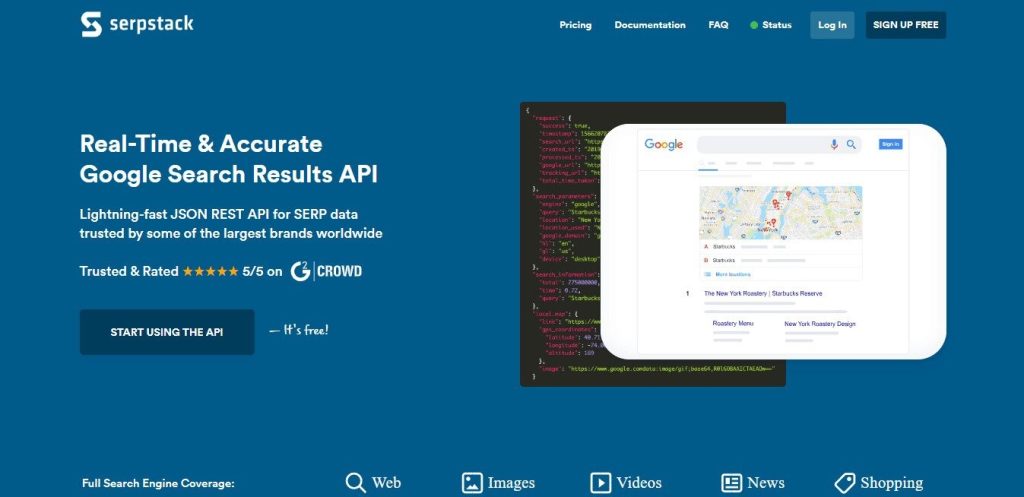
Serpstack is a solid choice for teams that want dependable SERP data without over-engineering their stack. It supports the core search engines most SEO teams rely on and integrates easily into existing workflows.
The API is intentionally straightforward. You submit a query, define location and device, and receive structured results suitable for long-term keyword rank tracking and reporting.
Key features
Google, Bing, and Yahoo SERP data
Global geo targeting
Desktop and mobile results
REST API with JSON output
Pros
Simple pricing structure
Fast onboarding
Reliable for ongoing rank tracking
Cons
Less granular SERP feature extraction than enterprise-focused tools
Best for
SMBs, SaaS companies, and teams building internal keyword tracking tools
CTA: Start tracking rankings with Serpstack’s free API tier
3. Scrapingdog Best budget-friendly multi-engine option
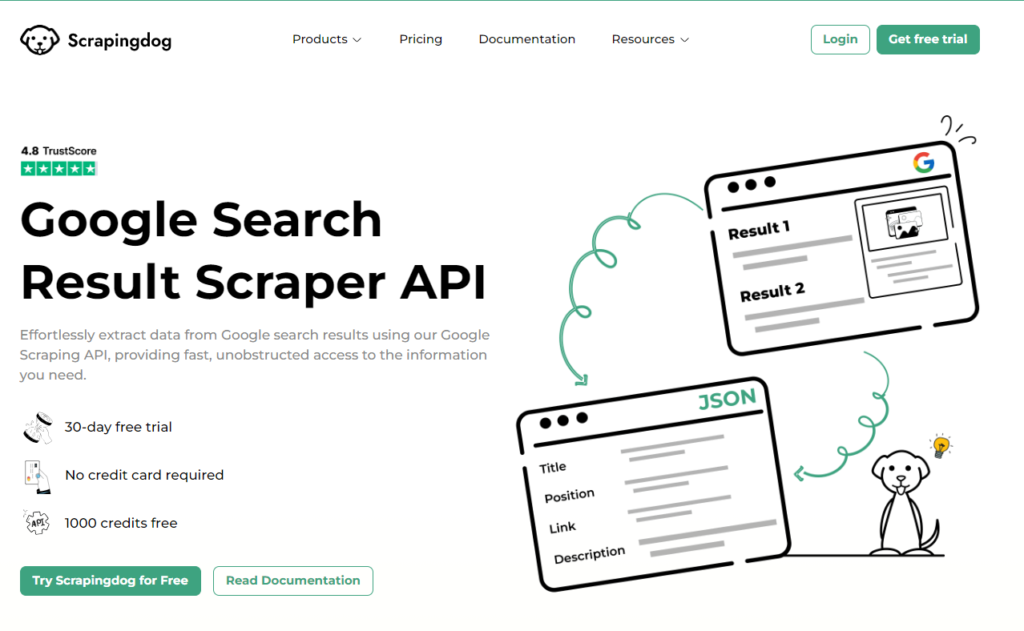
Scrapingdog sits closer to the scraping infrastructure layer than pure SEO tooling. It works well when flexibility and cost efficiency matter more than deeply structured SEO-specific output.
Developers can query multiple search engines while Scrapingdog handles proxies and CAPTCHA challenges behind the scenes.
Key features
Google, Bing, and DuckDuckGo support
Automatic proxy rotation and CAPTCHA handling
Request-based pricing
Pros
Cost-effective entry point
Flexible for experimentation and testing
Cons
Requires more post-processing for SEO analysis
Best for
Developers, startups, and teams experimenting with SERP-driven workflows
CTA: Claim free API credits with Scrapingdog
4. DataForSEO Best for advanced SERP analytics
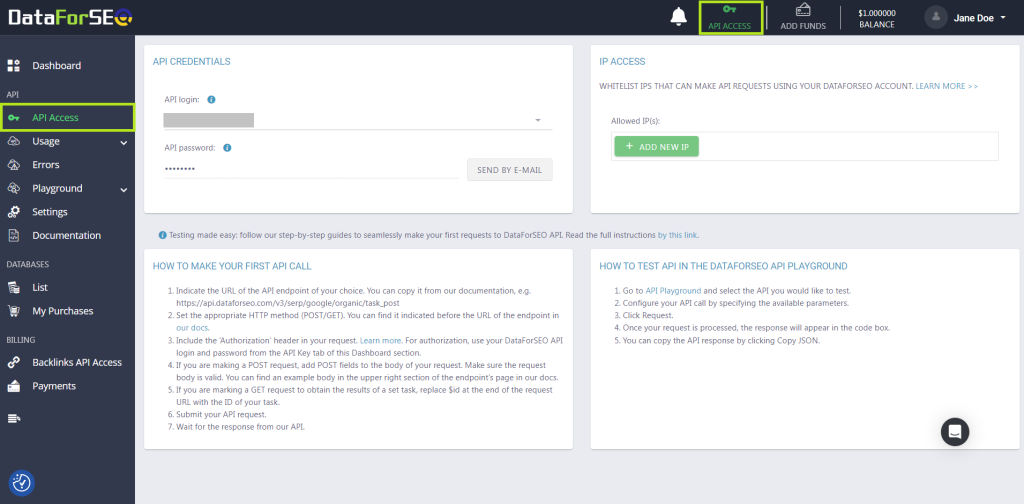
DataForSEO offers one of the most comprehensive SEO data ecosystems available. Its SERP APIs expose deep detail, including historical results and rich SERP feature breakdowns.
This is not a lightweight solution, but for teams running large-scale SEO analysis, the depth and flexibility are hard to match.
Key features
Detailed SERP feature extraction
SERP history and trend data
Advanced filtering and segmentation
Pros
Extremely rich data model
Well suited to data science workflows
Cons
Steeper learning curve
Pricing complexity for smaller teams
Best for
Enterprise SEO platforms and advanced analytics teams
CTA: Explore advanced SERP analytics with DataForSEO
5. SerpApi Best for rapid prototyping
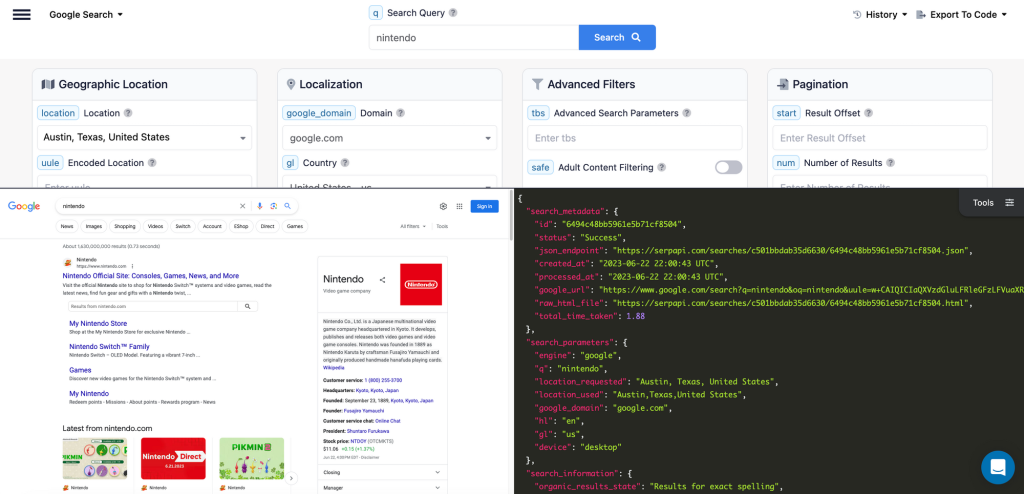
SerpApi is often the fastest way to validate SERP-driven ideas. Its documentation, playground, and debugging tools make it popular for proofs of concept and early-stage development.
Key features
Google and regional search engines
Rich SERP feature coverage
Interactive API playground
Pros
Excellent documentation
Ideal for fast experimentation
Cons
Costs increase quickly at scale
Best for
Prototyping internal tools and validating SERP use cases
CTA: Prototype faster with SerpApi’s free trial
6. Bright Data SERP API Best for massive scale
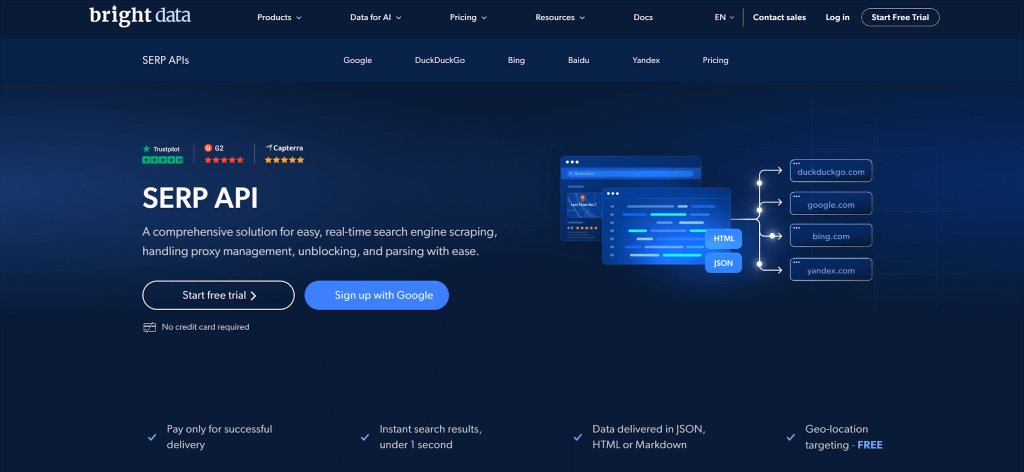
Bright Data combines SERP APIs with one of the largest proxy networks available. This makes it suitable for extremely high concurrency, global coverage, and data aggregation at scale.
Best for
Large enterprises and data aggregation platforms operating at very high volumes
CTA: Request enterprise SERP API access from Bright Data
7. Oxylabs SERP API Best for compliance-focused enterprises
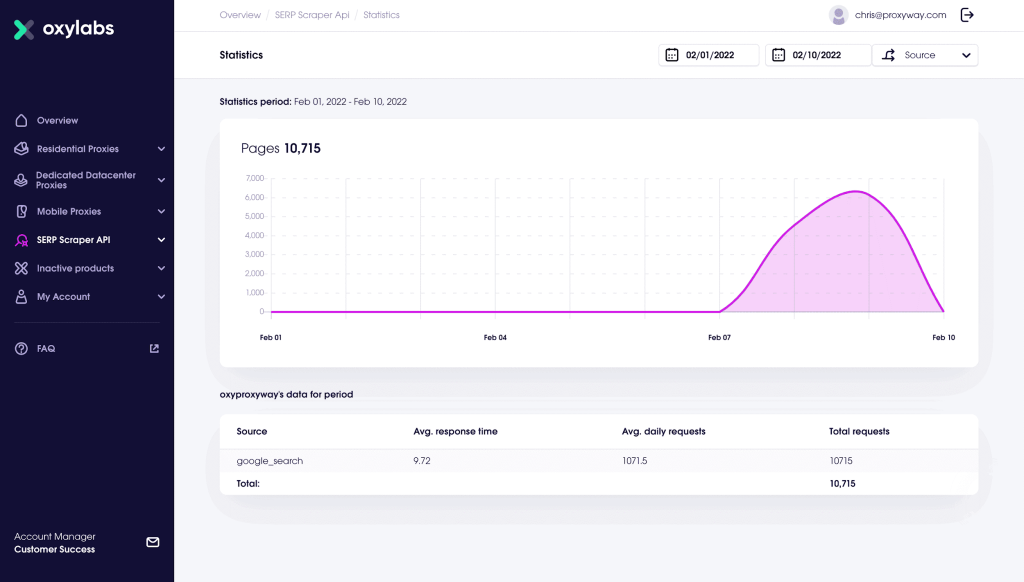
Oxylabs prioritises stability, compliance, and geographic reach. It is often chosen by organisations operating in regulated environments where consistency and risk management matter.
Best for
Highly regulated enterprise use cases
CTA: Start a SERP API trial with Oxylabs
Rather than relying on a feature checklist alone, the sections below focus on how each SERP API performs in real SEO and market research workflows, and where each one fits best in practice.
How to choose the right SERP API for your SEO or market research use case
If your primary focus is SEO rank tracking and competitor monitoring, Zenserp and Serpstack offer the best balance of simplicity and accuracy. For deeper SERP feature analysis and historical insights, DataForSEO stands out.
Teams operating at a very large scale or under strict compliance requirements should evaluate Bright Data or Oxylabs. Developers validating ideas or building proofs of concept may prefer the flexibility of SerpApi or Scrapingdog.
FAQs
What is a SERP API
A SERP API allows you to retrieve search engine results programmatically without building and maintaining scraping infrastructure.
Are SERP APIs legal to use
Most SERP APIs operate within acceptable frameworks, but teams should always review search engine terms and applicable regulations.
Can SERP APIs be used for keyword rank tracking
Yes. Keyword rank tracking is one of the most common and well-supported use cases.
Do SERP APIs support mobile and local results
Most modern SERP APIs support device type and geo targeting down to city level.
Which SERP API is best for beginners
Zenserp and Serpstack are the easiest to start with due to simple setup and clear pricing.
Lorem ipsum dolor sit amet, consectetur adipiscing elit. Ut elit tellus, luctus nec ullamcorper mattis, pulvinar dapibus leo.
Get Your Free API Key
Power your applications with fast and accurate Google Search API data. Built for developers who need reliable SERP results at scale.
Get Free API AccessFree monthly requests included
